Facebook
 X
X
 Pinterest
 Copy Link
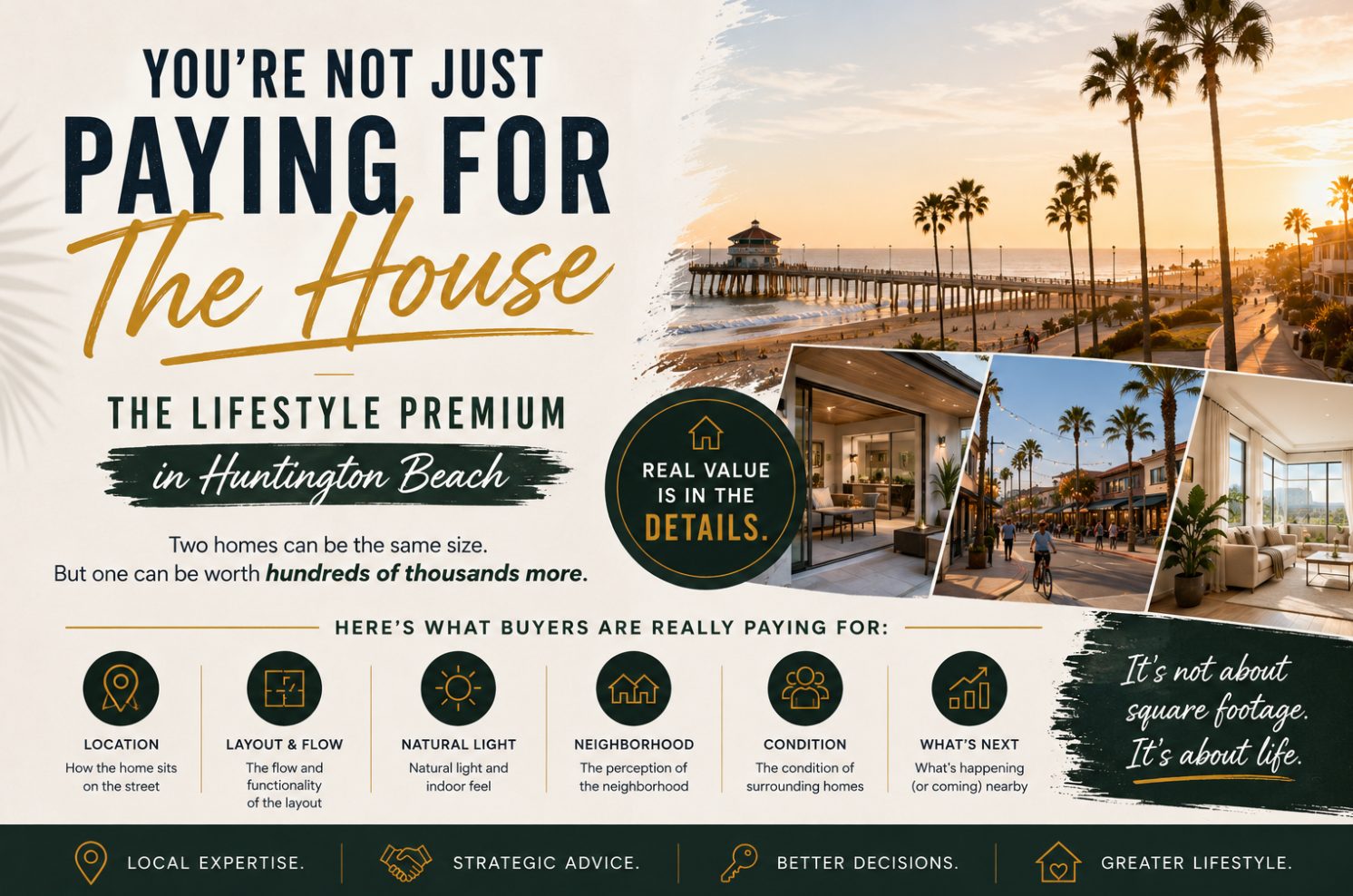
One thing I’ve noticed over the years is that buyers often start their home search focused almost entirely on the house itself.
They’ll search by:
- price
- square footage
- bedrooms
- lot size
- upgrades
And while those things absolutely matter, they usually are not what determines whether someone truly loves where they live long term.
In Huntington Beach especially, lifestyle matters just as much as the home.
That’s because Huntington Beach is not a one-size-fits-all city. Different neighborhoods attract completely different buyers, even when the homes are relatively similar on paper.
Some people want walkability and energy. Others want quiet streets and larger lots. Some buyers prioritize beach access, while others care more about schools, commute times, or long-term value.
In many cases, the “right” neighborhood ends up mattering more than the “perfect” kitchen.
So, if you’re thinking about buying in Huntington Beach, here are some of the areas buyers ask me about most often and what makes each one unique.
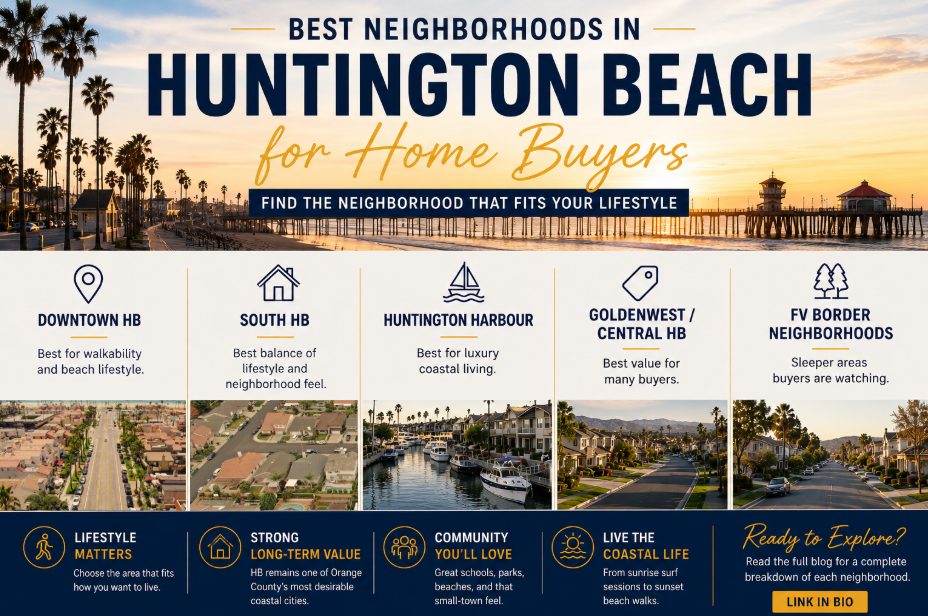
Downtown Huntington Beach (I live here!)
Best for Walkability and Beach Lifestyle
When most people picture Huntington Beach, they’re usually picturing Downtown.
This area offers the classic coastal lifestyle people move to Orange County for:
- beach access
- Main Street restaurants
- Pacific City
- nightlife
- coffee shops
- walkability
- ocean views
For many buyers, living Downtown feels like being on vacation year-round.
Because of that, demand here tends to stay strong even during slower markets. Buyers are not just purchasing a home. They’re buying a lifestyle that’s difficult to replicate elsewhere in Orange County.
However, there are tradeoffs.
Homes closer to the beach often come with:
- smaller lots
- tighter streets
- louder streets
- limited parking
- premium pricing
Still, many buyers happily accept those tradeoffs because of the location itself.
If someone wants energy, walkability, and a true beach-town atmosphere, Downtown Huntington Beach is usually high on the list.
South Huntington Beach
Best Overall Balance for Many Buyers
South Huntington Beach tends to attract buyers looking for a balance between lifestyle and neighborhood feel.
This area still gives buyers great beach proximity, but it usually feels a bit quieter and more residential than Downtown.
Many buyers love South HB because it offers:
- strong schools
- family-oriented neighborhoods
- bike-ability
- wider streets in certain tracts
- easy beach access
- long-term stability
- quiet days and nights
Additionally, homes in South Huntington Beach often appeal to buyers planning to stay for many years instead of treating the home as a short-term move.
That long-term demand helps keep this area consistently desirable.
Another thing buyers like is that South HB still maintains a coastal feel without some of the constant activity that comes with living closer to Main Street.
For many families, that balance is exactly what they want.
Huntington Harbour
Best for Luxury Coastal Living
Huntington Harbour has a completely different feel from most of Huntington Beach.
This area is centered around waterfront living, boating, paddleboarding, kayaking, and a quieter coastal lifestyle.
Buyers looking in the Harbour are usually drawn to:
- waterfront homes
- private docks
- sunset views
- slower-paced atmosphere
- luxury coastal living
In many ways, it feels more relaxed and tucked away compared to other parts of the city.
Inventory here is also more unique. Waterfront homes naturally create pricing differences that are harder to compare directly with standard neighborhood sales.
As a result, buyers in Huntington Harbour are often purchasing based as much on lifestyle as they are on the actual home itself.
For people who love being on the water, there really are not many places in Orange County that offer the same experience.
Goldenwest and Central Huntington Beach
Best Value for Many Buyers
Not every buyer wants or needs to live directly at the beach.
That’s why many buyers end up focusing heavily on Central Huntington Beach and areas near Goldenwest.
These neighborhoods often offer:
- more approachable pricing
- larger variety of homes
- central access to the city
- shorter drives to shopping and restaurants
- easier freeway access
For buyers trying to maximize value, these areas can make a lot of sense.
In many cases, buyers can get:
- more interior space
- larger lots
- quieter streets
- updated homes
while still being only a short drive or bike ride from the beach.
This part of Huntington Beach also tends to attract buyers who are thinking more long term about value and livability instead of purely chasing the beach lifestyle image.
And honestly, for many people, it ends up being the smarter fit.
Fountain Valley Border Neighborhoods
The Sleeper Areas Buyers Keep Watching (I grew up here!)
One trend I’ve noticed recently is more buyers expanding their search toward Huntington Beach border neighborhoods near Fountain Valley.
That’s especially true for buyers who want:
- strong schools
- larger lots
- quieter neighborhoods
- easier commuting
- more house for the money
These areas often give buyers access to the Huntington Beach lifestyle while avoiding some of the pricing pressure closer to the coast.
Additionally, certain neighborhoods near the Fountain Valley border have built strong reputations for:
- pride of ownership
- stable neighborhoods
- family appeal
- long-term resale strength
For many buyers, these areas become the “best of both worlds” option.
They still get proximity to the beach and coastal lifestyle, but with a slightly different day-to-day feel.
So… Which Huntington Beach Neighborhood Is Best?
Honestly, there is no universal answer.
The best neighborhood usually is not the most expensive one. Instead, it’s the area that fits how you actually want to live.
That’s why I always encourage buyers to think beyond the home itself and focus on questions like:
- How often will you realistically go to the beach?
- Do you want walkability or quiet streets?
- Is commute more important than location prestige?
- Are schools a major priority?
- Do you want long-term family living or a more active lifestyle?
Those answers usually point buyers toward the right neighborhood faster than square footage ever will.
Final Thoughts
One of the biggest mistakes buyers make is assuming all of Huntington Beach feels the same.
It doesn’t.
Each area has its own personality, lifestyle, strengths, and tradeoffs. And in many cases, finding the right neighborhood matters more than finding the perfect house.
That’s especially true in a market where lifestyle continues driving demand across Orange County.
If you’ve been thinking about buying in Huntington Beach and are unsure where to focus, feel free to reach out. I’m always happy to help buyers narrow down which neighborhoods actually fit their goals, lifestyle, and long-term plans best.