BuyingSelling May 4, 2026

Why Two Similar Homes Can Have Very Different Values

Why Two Similar Homes Can Have Very Different Values

When most people think about home value, they focus on the obvious:

Square footage.
Number of bedrooms.
Bathrooms.

And yes …those matter.

However, some of the biggest factors that impact value aren’t nearly as obvious. In fact, they’re the things most people don’t notice until it’s too late.

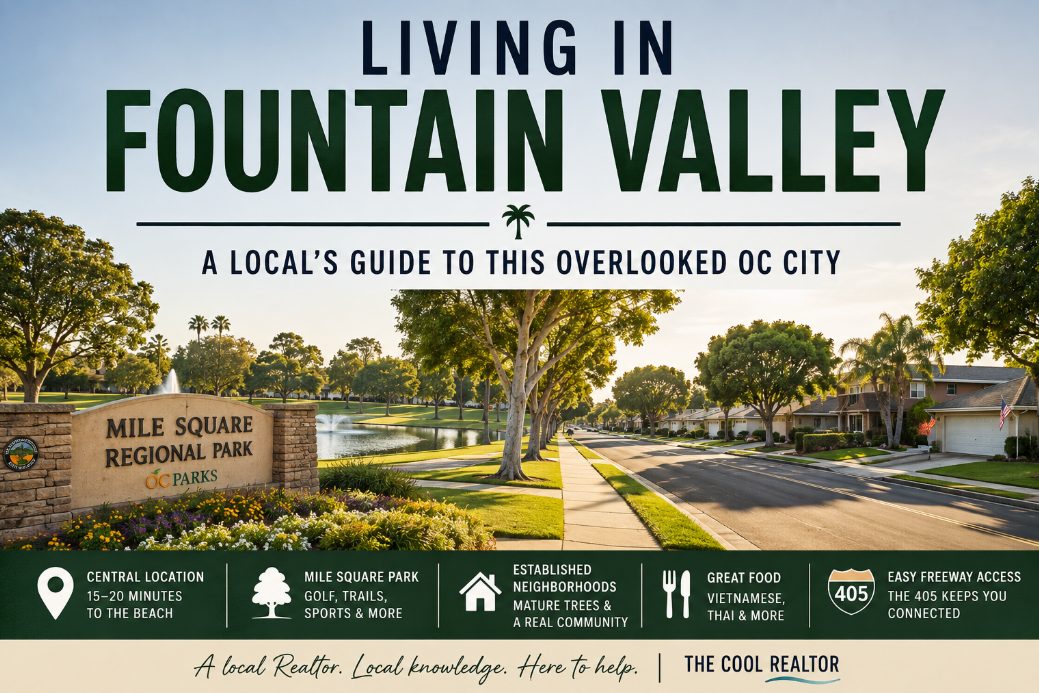
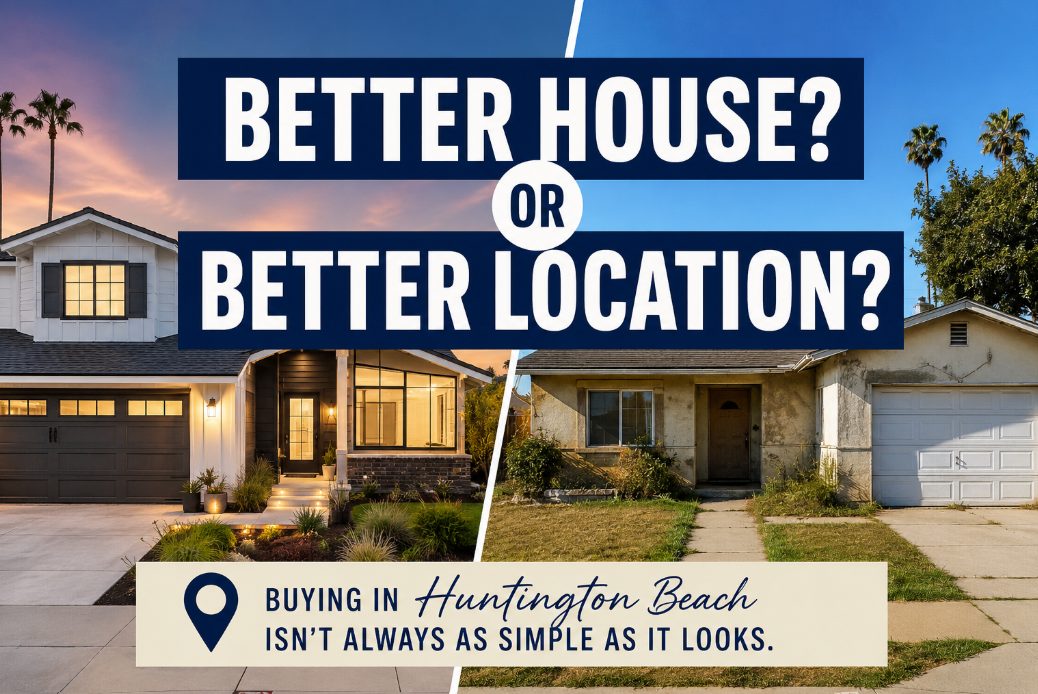
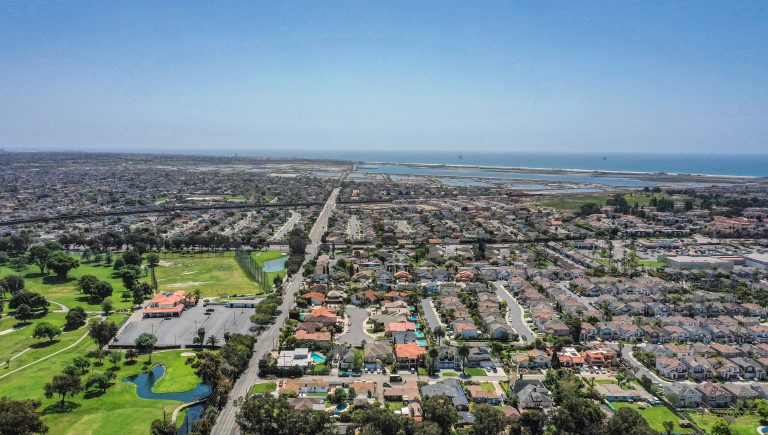
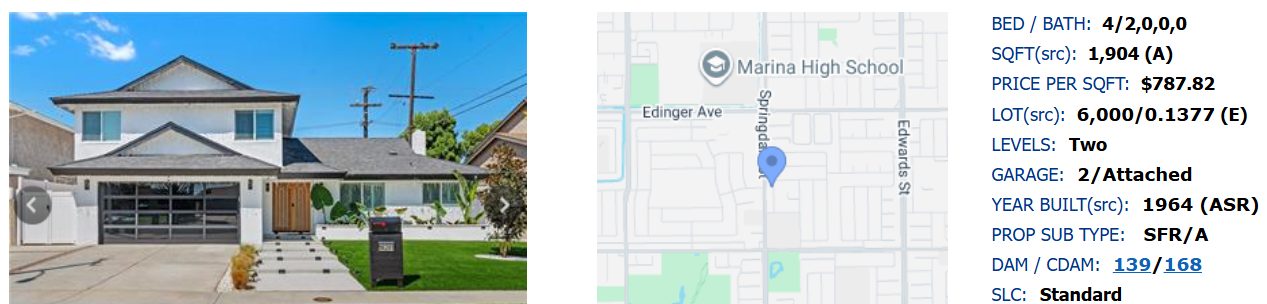
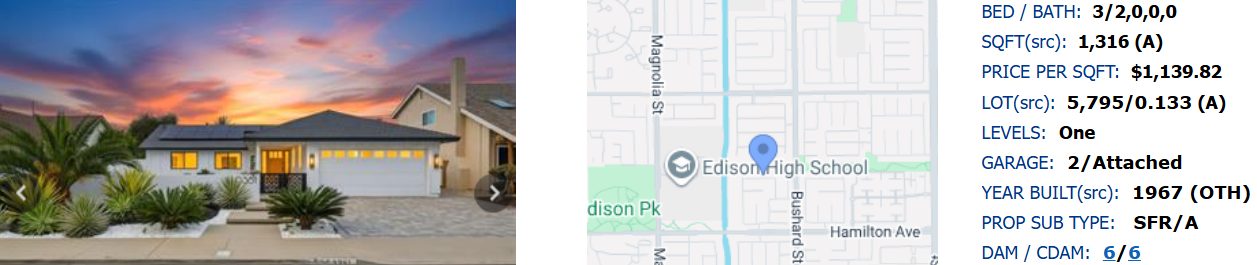
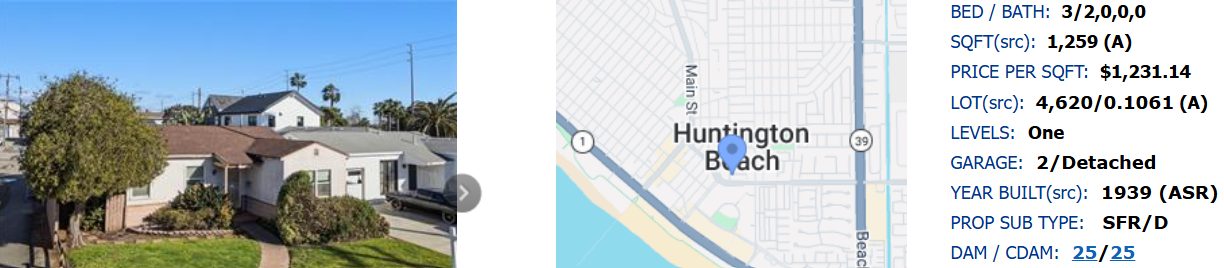
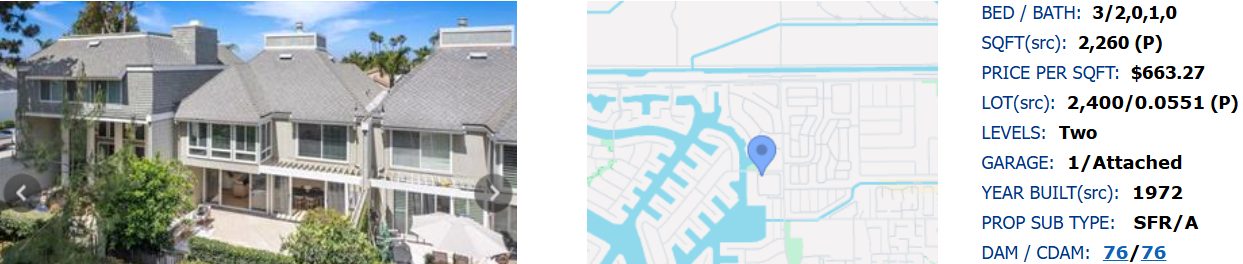
I see this all the time here in Huntington Beach and Fountain Valley. Two homes can look nearly identical on paper… yet sell for very different prices.

So what’s actually driving that difference?

Let’s break it down.


1. Where the Home Sits on the Street

At first glance, a home is a home.

But zoom out a bit, and the exact location on the street matters more than people think.

For example:

  • Backing a busy road vs tucked into a quiet interior tract
  • Near an entrance vs deeper in the neighborhood
  • Next to a well-kept home vs one that’s clearly neglected

Because of this, two similar homes can easily have a noticeable price gap.

And the interesting part? Buyers feel this difference immediately — even if they can’t explain it.


2. Layout > Square Footage

Bigger doesn’t always mean better.

In fact, I’ve seen smaller homes sell for more simply because the layout makes more sense.

Think about:

  • Open vs chopped-up floor plans
  • Natural flow between kitchen, living, and outdoor space
  • Bedroom placement (especially primary suites)

As a result, a well-designed 1,800 sq ft home can often outperform a poorly laid out 2,000 sq ft one.


3. Natural Light (This One Is Huge)

This is one of the most underrated factors—and one of the most powerful.

Walk into a bright, naturally lit home, and it just feels better.

On the flip side, a darker home, even if it’s updated, can feel smaller and less inviting.

Because of that, buyers tend to:

  • Spend more time in brighter homes
  • Feel more emotionally connected
  • Be more willing to stretch on price

And that directly impacts value.


4. The Condition of the Homes Around It

Your home doesn’t exist in a vacuum.

Instead, it’s constantly being compared to what’s around it.

If neighboring homes are:

  • Well-maintained
  • Updated
  • Consistent in appearance

That lifts the perceived value of the entire street.

On the other hand, if there are multiple neglected properties nearby, it can quietly pull values down—even if your home is in great shape.


5. Perception of the Area (Not Just the Data)

Data matters—but perception often matters more.

For example:

  • School ratings vs how locals talk about the schools
  • Walkability and nearby amenities
  • Overall “feel” of the neighborhood

Sometimes, a neighborhood simply feels more desirable—and buyers respond to that.

Because of this, perception can influence demand just as much as hard numbers.


6. Nearby Changes and Future Development

What’s happening around a home can impact value just as much as the home itself.

New developments, improved retail, or better infrastructure can all:

  • Increase demand
  • Bring more attention to an area
  • Push values upward over time

At the same time, certain changes can have the opposite effect.

That’s why understanding what’s coming—not just what’s there—is so important.


Final Thought

At the end of the day, home value isn’t just about specs on a listing.

It’s about how a property feels, where it sits, and what surrounds it.

That’s also why pricing—and buying—the right way requires more than just looking at comps.

It takes understanding the details that most people overlook.


If you’re ever curious how these factors apply to your home (or a home you’re thinking about), I’m always happy to walk through it with you.

Sometimes it’s the small things that make the biggest difference.

Buying April 28, 2026

Why Buyers Freeze Right Before Making an Offer (And How to Get Past It)

Why Buyers Freeze Right Before Making an Offer (And How to Get Past It)

If you’ve been thinking about buying a home lately, there’s a good chance you’ve felt this…

You find a home you like.
You run the numbers.
You even start picturing yourself living there.

Then… nothing happens.

Instead of moving forward, hesitation kicks in. Doubt creeps in. Suddenly, everything feels uncertain.

Right now, I’m seeing this a lot—especially here in Orange County.

And to be clear, it’s not because buyers aren’t ready.

More often, it’s because they’re stuck in a mental loop that feels logical… but ultimately leads to missed opportunities.

Let’s break down what’s actually going on.


1. The Fear of Overpaying

First and foremost, this is the biggest hurdle.

Many buyers are still anchored to what prices used to be—whether that’s 2021, 2022, or even just last year.

Because of that, when they see today’s pricing, the immediate reaction is:

“What if I’m buying at the top?”

It’s a fair question.

However, here’s what tends to get overlooked:

Prices rarely feel comfortable when you’re buying, they only feel obvious after they’ve already moved up.

For example, buyers who purchased 2–3 years ago had the exact same concerns.
Looking back, most of them are now sitting on strong equity.


2. Too Much Information (And Not Enough Clarity)

At the same time, buyers today are dealing with an overload of information.

Between Zillow, TikTok, YouTube, and nonstop headlines, it’s hard to know what to trust.

On one hand, you’ll hear it’s a great time to buy.
On the other, someone’s predicting a crash.
Meanwhile, another source says to wait for rates to drop.

As a result, many buyers freeze.

Because when everything feels important, nothing feels certain.

In reality, the market isn’t one-size-fits-all. Instead, it’s hyper-local—and often property-specific.

That’s exactly why two homes on the same street can have completely different outcomes.


3. Waiting for the “Perfect” Scenario

Naturally, a lot of buyers are hoping for the perfect setup:

  1. Lower interest rate
  2. Lower home price
  3. More inventory

On paper, that sounds ideal.

In practice, though, it almost never happens all at once.

In fact, when one factor improves – like interest rates dropping – demand typically increases as well. Consequently, prices and competition tend to rise again.

Because of that, waiting for “perfect” often turns into waiting much longer than expected.


4. Decision Fatigue Is Real

At first, touring homes is exciting.

However, after seeing 10, 15, or even 20+ properties, things start to shift.

Everything begins to blend together.
Every option comes with tradeoffs.
Nothing stands out as a clear “yes.”

At that point, it’s common to hear:

“Let’s just wait for the next one.”

Still, here’s the catch—sometimes the home you passed on was the right one. It just didn’t feel obvious in the moment.


So How Do You Actually Move Forward?

When my clients hit this stage, here’s what I recommend:

1. Get Clear on Your Non-Negotiables

Rather than focusing on a long wish list, narrow it down to your true must-haves.

Once those are met, everything else becomes a preference—not a dealbreaker.


2. Focus on the Long Game

If you’re planning to own the home for 5–10 years, short-term market shifts matter far less.

Instead, the better question becomes:

“Does this home support my lifestyle and financial direction?”


3. Understand the Real Numbers

In many cases, hesitation comes from uncertainty.

When you clearly understand your monthly payment, upfront costs, and future options, decisions become much easier.


4. Accept That No Home Is Perfect

At the end of the day, every home comes with tradeoffs.

Rather than chasing perfection, the goal is to find the right fit for where you are right now.


Final Thought

More often than not, buyers don’t miss out because they couldn’t afford the home.

Instead, they miss out because they hesitated on the right one.

So, if you’re in that position right now, take a step back and ask yourself:

“Am I waiting for the right opportunity… or just avoiding the decision?”


If you want help working through that, without any pressure. I’m always happy to talk it through.

Sometimes, a quick conversation is all it takes to bring clarity.

Buying April 22, 2026

What $1.2M Buys in Orange County Today vs 3 Years Ago

“Should I just wait?”

I’ve been getting this question a lot lately.

Usually, it comes right after we look at a home that almost checks every box… but needs a little work.

And I get it. On the surface, waiting feels like the safe move.
Better rates, maybe lower prices, better house… right?

But when you zoom out and actually look at what’s happened over the past few years, the story changes.


 Let’s Talk Real Numbers (Not Headlines)

According to data from California Association of Realtors and CoreLogic:

  • Orange County home prices have climbed roughly 15%–25% over the past 3 years
  • Even with higher interest rates, values have held strong
  • Inventory is still tight, which continues to support pricing

That means the same budget today doesn’t stretch as far as it used to.

So instead of guessing… let’s actually look at it.


 What $1.2M Bought You 3 Years Ago

A few years back, $1.2M in Orange County usually got you:

  • A move-in ready 3–4 bedroom home
  • Updated kitchen, decent roof, minimal repairs
  • Solid neighborhoods like Huntington Beach or Fountain Valley
  • A competitive market—but still manageable

Back then, the biggest challenge wasn’t condition.

It was speed and competition.

If you liked a home, you had to move fast—and probably over asking.


 What $1.2M Gets You Today

Fast forward to now, and things look a little different.

That same $1.2M is more likely to get you:

  • A dated home or smaller layout
  • Something that needs $20K–$75K+ in updates
  • More options sitting on the market
  • A real chance to negotiate

So yes… you might sacrifice some finishes.

But you gain something buyers didn’t have before:

Leverage


 The Cost of Waiting (This Is the Part That Matters)

Here’s where things start to click for most buyers.

Let’s say someone waited 3 years on a $1.0M home.

With a 15%–25% increase:

  • That home is now $1.15M–$1.25M+

That’s a $150K–$250K jump just from sitting on the sidelines.

And even if rates come down a bit later…

  • You’re still financing a higher price
  • You’re still bringing more cash to close

Here’s the simple truth:

You can refinance a rate.
You can’t refinance the price you paid.


 Why This Keeps Happening

A lot of people assume prices should fall when rates go up.

That would make sense… if supply wasn’t so tight.

But right now:

  • Many homeowners are locked into low rates and not selling
  • There aren’t enough homes hitting the market
  • Demand hasn’t disappeared—it’s just more selective

Data from Zillow and Redfin continues to show inventory sitting below normal levels.

And when supply stays low… prices don’t drop the way people expect.


 Then vs. Now — The Real Tradeoff

Let’s simplify it.

3 Years Ago:

  • Lower prices
  • Lower rates
  • Intense competition
  • Limited negotiating power

Today:

  • Higher prices
  • Higher rates
  • More negotiating room
  • More strategic opportunities

So, the question isn’t really “Is now a good time?”

It’s:

What kind of opportunity do you want?


 What Smart Buyers Are Doing Right Now

The buyers winning today aren’t trying to time everything perfectly.

Instead, they’re:

  • Buying homes with upside potential
  • Negotiating credits or better terms
  • Planning to refinance when rates improve
  • Letting appreciation work in their favor over time

It’s a different approach—but it’s working.


What I’m Seeing Here in OC

Locally—Huntington Beach, Fountain Valley, Costa Mesa:

  • The $1.1M–$1.4M range is still very active
  • Well-priced homes still move quickly
  • Overpriced homes are sitting longer

And that last part?

That’s where the opportunity is.


 Final Thought

Everyone wants to “time the market.”

But in real estate, it usually plays out differently.

Time in the market beats timing the market.

The biggest mistake I see isn’t buying at the wrong time…

…it’s waiting and watching the same home become more expensive.


Curious What $1.2M Looks Like Right Now?

If you want, I can show you:

  • What’s currently on the market
  • Where there’s negotiation room
  • Which homes actually have upside

No pressure, just real insight so you can make the right call.

Buying April 14, 2026

The Hidden Costs of Buying a Fixer in Orange County

The Hidden Costs of Buying a Fixer in Orange County

(That Most Buyers Miss)

If you’ve been scrolling homes in Orange County lately, you’ve probably noticed something:

The “fixers” look like deals.

Lower price. More potential. Maybe even in a better neighborhood than you expected.

But here’s the reality I’m seeing right now working with buyers locally…

A lot of these “deals” aren’t actually deals anymore.

And if you’re not careful, you can walk into a property thinking you’re saving money—only to realize later you’ve taken on way more than you bargained for.


Let Me Give You a Real Example (From This Week)

I was reviewing a property with a client that looked like a solid opportunity on paper.

  • Great location
  • Decent layout
  • Priced below nearby comps

At first glance, it felt like a classic “buy it, fix it, build equity” situation.

But once we dug into inspections and walked the property more carefully, here’s what started stacking up:

  • Termite + minor repairs: ~$4,000
  • No attic insulation: ~$5,000
  • Aging HVAC system: $5,000–$10,000
  • Roof concerns: ~$9,000 (pending confirmation)
  • Chimney work: $2,000–$5,000

Suddenly, that “deal” needed $25,000–$30,000+ just to get it into solid, livable condition.

And that’s before any cosmetic upgrades.


Why This Is Happening More in 2026

This isn’t a one-off situation. I’m seeing it more and more across Orange County.

Here’s why:

1. Labor and material costs are still high

Even smaller jobs aren’t cheap anymore. What used to be a $2K fix can now easily be double.

2. Sellers are pricing just low enough to attract attention

They know buyers are hunting for deals—so they price accordingly.
However, they’re not always factoring in the true cost of repairs.

3. Buyers are more stretched financially

With today’s rates, most buyers don’t have an extra $30K–$50K sitting around after closing.

So even if the price looks good… the total cost doesn’t always make sense.


The Costs Buyers Don’t Think About

Here’s where people get caught off guard:

It’s not just the big-ticket items

Yes, roof and HVAC matter.
But it’s the combination of smaller issues that really adds up fast.

  • Electrical updates
  • Plumbing fixes
  • Insulation
  • Windows
  • Drywall + paint after repairs

Individually? Manageable.
Together? Easily tens of thousands.


It’s not just money—it’s time

Every project takes longer than expected.

  • Waiting on contractors
  • Permits (especially here in OC)
  • Delays on materials

That “quick fixer” can easily turn into months of work.


It’s not just the work—it’s the stress

Living through renovations—or managing them from the outside—is no joke.

Especially if this is your first home.


When a Fixer Does Make Sense

I’m not saying avoid fixers completely.

In the right situation, they can still be a great move.

They tend to make sense when:

  • You have cash reserves after closing
  • You’re comfortable managing projects
  • The numbers still work after realistic repair estimates
  • You’re buying with a longer-term mindset

How Smart Buyers Are Winning Right Now

The buyers who are winning in this market aren’t just chasing the lowest price.

They’re asking a better question:

“What’s my total cost to own this home?”

Sometimes that means:

  • Passing on a fixer
  • Or negotiating hard when issues come up
  • Or choosing a more turnkey home that actually costs less long-term

My Advice (If You’re Thinking About a Fixer)

Before you jump on what looks like a deal:

  1. Get real repair estimates early (not guesses)
  2. Pad your budget—things will come up
  3. Think through your timeline and stress tolerance
  4. Run the numbers like an investor would

Because the goal isn’t just to buy a home…

It’s to make a smart decision that puts you in a better position a year from now.


Final Thought

Right now, in Orange County, the gap between a “good deal” and a “bad decision” is getting smaller.

The difference usually comes down to understanding the full picture.

If you’re considering a fixer and want a second set of eyes on it, I’m always happy to help you break it down and run the numbers before you make a move.

News April 9, 2026

What the Iran Conflict Means for Mortgage Rates and Home Prices

How the Iran Conflict Is Affecting the Orange County Housing Market (Right Now)

At first glance, what’s happening in Iran feels far removed from real estate in Orange County.

However, the reality is different.

Global events like this can move mortgage rates, shift buyer behavior, and change how quickly homes sell — sometimes almost overnight.

And we’re already starting to see it happen.


Why a Conflict Overseas Can Impact Your Mortgage Rate

When tensions rise in the Middle East, one thing the market immediately watches is oil.

More specifically, investors focus on shipping routes like the Strait of Hormuz — one of the most important oil channels in the world. If that supply is threatened, oil prices can spike quickly.

From there, the ripple effect begins.

Higher oil prices can push inflation higher. As a result, bond markets react, Treasury yields move, and mortgage rates tend to follow.

That’s exactly what played out over the past couple of weeks.

Mortgage rates climbed noticeably as tensions escalated, before easing slightly after news of a temporary ceasefire and reduced pressure on oil supply (source: Freddie Mac, Reuters).


What We’ve Seen So Far: Volatility

The biggest theme right now is not direction — it’s volatility.

Rates moved up quickly as uncertainty increased. Then, almost just as fast, they softened when markets saw signs of stabilization.

Freddie Mac reported the average 30-year fixed mortgage rate around the mid-6% range in early April, while Mortgage Bankers Association data showed rates had risen significantly since the conflict began before recently dipping slightly (source: Freddie Mac, MBA via Reuters).

In other words, the housing market isn’t crashing.

But it is reacting.


What This Means for Buyers in Orange County

For buyers, the biggest impact comes down to affordability.

In a market where the median home price is still hovering around $1.2M in Orange County, even small rate changes can make a big difference in monthly payments (source: Redfin).

Because of that, buyers are adjusting their behavior in a few key ways:

  • They’re more payment-focused than ever
  • They’re taking longer to make decisions
  • They’re becoming more selective with condition and price
  • And in some cases, they’re pausing altogether

However, this doesn’t mean demand disappears.

Instead, it becomes more intentional.

The homes that feel like a clear value still move. The ones that don’t… sit.


What This Means for Sellers

For sellers, this kind of market shift is where strategy matters most.

When buyers feel uncertainty — whether it’s about rates, inflation, or global events — they don’t stop looking. But they do become more cautious.

That usually leads to:

  • Stronger negotiation from buyers
  • More attention to property condition
  • Less tolerance for overpricing
  • Longer days on market for “almost right” homes

So while homes are still selling, the margin for error is smaller.

Pricing correctly and presenting the home well isn’t just important right now — it’s everything.


The Bigger Picture: A More Selective Market

Here’s the real takeaway.

This situation doesn’t automatically create a downturn.

But it does create a more selective market.

And we’re already seeing that dynamic play out across Orange County:

  • Well-priced homes are still moving
  • Updated, turnkey properties are getting the most attention
  • Overpriced or outdated homes are sitting longer than expected

That split market you’ve been hearing about?

This is one of the reasons it exists.


My Take (What I’m Telling Clients Right Now)

If you’re a buyer:

Stay ready. Rates can shift quickly, and opportunities tend to show up when uncertainty is highest.

If you’re a seller:

Don’t price for last month’s market. Price for today’s buyer — the one watching their monthly payment closely.

Because right now, confidence is what sells homes.


Final Thoughts

Most people think real estate is purely local.

And while local factors like inventory and demand matter most, global events can absolutely influence the cost of money and buyer psychology.

That’s what we’re seeing right now.

The Iran situation isn’t directly changing home values overnight.

But it is influencing mortgage rates, and that alone is enough to shift how buyers and sellers behave in today’s market.


Sources & Market Data

Selling March 31, 2026

The OC Market just Split — Here’s What that Means

The Orange County Split Market: Why Some Homes Sell Fast While Others Sit

If you’ve been watching the Orange County housing market lately, you’ve probably noticed something confusing…

Some homes are flying off the market with multiple offers.
Meanwhile, others are sitting for weeks, cutting price, and getting little traction.

So what’s actually going on?

In reality, we’re in what I’d call a “split market.” And more importantly, understanding it can make or break your strategy — whether you’re buying or selling.


It’s Not a Slow Market — It’s a Selective One

ImageImageImage

At first glance, it might feel like demand has slowed down. However, that’s not the full picture.

Instead, buyer behavior has shifted.

According to recent reporting from the Orange County Register and national trends from Redfin:

  • Inventory has increased
  • Days on market are stretching
  • Price reductions are becoming more common

Even so, buyers haven’t disappeared — they’ve simply become more selective.

As a result, homes now fall into two very different categories: the ones that move quickly, and the ones that don’t.


The Homes That Are Selling Fast

ImageImageImage

On one side of the market, certain homes are still performing extremely well. In fact, they often attract strong interest within the first week.

Typically, these homes share a few key traits:

1. Fully Updated or Move-In Ready
First, buyers want convenience. With renovation costs still high, most prefer homes that don’t require immediate work.

2. Priced Correctly From the Start
Additionally, pricing strategy matters more than ever. Testing the market with a high list price often leads to slower momentum.

3. Strong Location + Functional Layout
Beyond that, layout and livability play a big role. Open spaces, natural light, and practical flow consistently stand out.

4. High-Quality Presentation
Finally, marketing can’t be overlooked. Strong photos, staging, and exposure create early demand — which drives better outcomes.


The Homes That Are Sitting

Turnkey House Design Ideas – 17 Real-Life Turnkey Homes - Build ItRun Down Living Room Stock Photos, Pictures & Royalty-Free Images - iStock


On the other hand, some homes are struggling to gain traction. More often than not, there’s a clear reason why.

Here’s what tends to hold them back:

• Overpricing
Even small pricing missteps can turn buyers away. Since they have more options, they’re quick to pass on anything that feels off.

• Condition Issues
Similarly, homes that need work aren’t as appealing unless priced aggressively. Buyers today are factoring in both cost and hassle.

• Weak Presentation
In addition, poor photos or lack of staging can reduce interest before a showing even happens.

• Limited Appeal
Lastly, unique layouts or less desirable locations naturally narrow the buyer pool, which slows activity.


What This Means for Sellers

So, what does all of this mean if you’re thinking about selling?

Simply put, strategy matters more than ever.

While strong results are still very possible, they require a more intentional approach. For example:

  • Pricing needs to reflect today’s market — not last year’s
  • Preparation should focus on making the home feel turnkey
  • Launch strategy is critical, since the first 7–10 days set the tone

Ultimately, the goal is to position your home as the best option the moment it hits the market.


What This Means for Buyers

On the flip side, buyers are in a much more favorable position than they were a year ago.

Because of increased inventory and longer days on market:

  • There’s more room to negotiate
  • Credits and concessions are more common
  • Decision-making doesn’t feel as rushed

That said, timing still matters.

When the right home comes up — especially one that’s well-priced and move-in ready — competition can still show up quickly. Therefore, knowing when to move fast is just as important as knowing when to wait.


The Bottom Line

At the end of the day, the Orange County market isn’t crashing — it’s dividing.

  • Well-positioned homes are selling quickly
  • Everything else is taking longer and adjusting

As this trend continues, the gap between those two categories is only getting wider.


My Take

From what I’m seeing locally here in Huntington Beach and nearby areas…

Many sellers are just slightly off — whether it’s pricing, preparation, or marketing. Because of that, they’re experiencing longer timelines and unnecessary price reductions.

Meanwhile, buyers who understand this shift are finding opportunities that simply didn’t exist a year ago.


Thinking About Buying or Selling?

If you’re wondering where your home would fall in today’s market — or how to take advantage of this as a buyer — I’m happy to walk you through it.

No pressure. Just a clear strategy so you know your options.

Selling March 23, 2026

Some Orange County Sellers Are Taking Less …They’re Just Not Saying It

 Some Sellers Are Quietly Taking Less — Here’s What That Means for You in Orange County

If you’ve been watching the Orange County market lately, you’ve probably noticed something…

Some homes sell fast. Others just sit.

At first glance, it feels inconsistent. However, there’s a pattern behind it.

And more importantly, there’s an opportunity most people are missing.

  • Sellers are negotiating more than it looks like on the surface.

The Market Didn’t Break — It Shifted

Over the past year, higher interest rates have changed how buyers move.

Fewer people are jumping on every listing. At the same time, buyers are more selective than they were just a couple years ago.

Because of that, pricing matters more. Presentation matters more. Timing matters more.

That said, this isn’t a weak market.

It’s just a split market.

Some homes still get strong activity right away. Others struggle to get traction.

And that gap is where things get interesting.


The Negotiation You Don’t See Online

Most people think they’ll spot a “deal” by looking for price drops.

Sometimes that works. But right now, a lot of the real movement is happening behind the scenes.

For example, sellers are:

  • Offering credits for repairs or closing costs
  • Helping buyers buy down their interest rate
  • Accepting offers below list after sitting for a few weeks
  • Becoming more flexible on timelines and terms

However, none of that shows clearly online.

  • The price might look firm… even when it’s not.

In fact, data from Zillow shows seller concessions have risen significantly over the past couple years — meaning many homes are effectively selling for less than the list price once credits are factored in.


Time on Market Tells the Real Story

Instead of focusing only on price, pay attention to how long a home has been sitting.

This is where the psychology starts to shift.

After about two weeks, sellers begin asking questions:

  • “Why hasn’t this sold yet?”
  • “Did we price it too high?”
  • “Are we missing buyers?”

By week three, the conversation usually changes again.

Now it becomes:
“What do we need to do to get this done?”

That’s where leverage starts to build.

Data from Redfin backs this up — homes that sit longer are far more likely to see price reductions or concessions compared to those that sell quickly.


What This Looks Like Locally

Across Huntington Beach, Costa Mesa, and Fountain Valley, we’re seeing the same trend.

Well-prepared homes still move quickly. In contrast, homes that miss the mark are sitting longer than expected.

As a result, the market is splitting into two lanes:

  • Homes that sell fast with strong demand
  • Homes that sit and become negotiable

Most buyers only focus on the first group.

The smarter ones? They watch the second.


What Smart Buyers Are Doing Differently

Right now, the best opportunities aren’t always the newest listings.

Instead, they’re often:

  • Slightly overpriced homes
  • Listings that have been sitting 2–4 weeks
  • Sellers who are more motivated than they appear

From there, it’s about strategy.

Strong buyers are:

  • Writing clean, realistic offers
  • Negotiating for credits or rate buydowns
  • Structuring deals that make sense long-term

In other words, they’re not chasing the hype. They’re playing the situation.


The Mistake Most Buyers Are Making

A lot of people are still waiting.

They’re waiting for:

  • Lower rates
  • Lower prices
  • A major market shift

That sounds logical. However, it ignores what’s happening right now.

You don’t need a market crash to get a good deal.

In fact, historically, data from groups like Freddie Mac shows that when rates drop, buyer demand tends to increase quickly — which often brings more competition right back into the market.


The Bottom Line

This isn’t a market where you win by guessing.

It’s a market where you win by paying attention.

Because while most people are focused on headlines…

  • Some buyers are quietly negotiating better deals than you’d expect.

Want Help Finding These Opportunities?

If you’re thinking about buying — or even just trying to understand what’s possible right now — I’m happy to walk you through it.

No pressure. Just real insight into what’s actually happening in our local market.


Sources:

There Are a Record 630,000 More Home Sellers Than Buyers – Redfin

Current Sales & Price Statistics – C.A.R.

Number of ‘Accidental Landlords’ Rises to Three-Year High – Zillow Research – Zillow

Selling March 16, 2026

What’s Really Happening in the Orange County Housing Market Right Now

Why Some Homes in Orange County Are Still Getting Multiple Offers

If you follow the Orange County housing market, you’ve probably heard mixed signals.

Some reports say the market is slowing. Others say homes still receive multiple offers within days.

Both statements can be true.

Across Orange County, the market has become more selective. Certain homes sit for weeks. Others attract strong buyer interest almost immediately.

As a Realtor here in Huntington Beach, I see this pattern often. The difference usually comes down to a few key factors.


1. Orange County Still Has Low Housing Inventory

Limited supply remains one of the biggest drivers in the Southern California real estate market.

During the pandemic, many homeowners locked in mortgage rates between 2% and 4%. Those owners now have little incentive to sell and take on a higher rate.

Fewer listings means fewer choices for buyers.

Meanwhile, demand for Orange County real estate remains strong. People continue moving here for the lifestyle, job opportunities, and coastal access.

When a well-priced home finally hits the market, buyers who have been waiting often act quickly.


2. Pricing Strategy Matters More Than Ever

In today’s market, pricing can determine how quickly a home sells.

Homes listed at the right market value tend to generate the most attention during the first week. Strong early activity often leads to competitive offers.

Overpriced homes usually experience the opposite result. Buyers hesitate, showings slow down, and price reductions follow.

A smart strategy focuses on accurate pricing from the start, not testing the market.


3. Turnkey Homes Attract the Most Buyers

Condition also plays a major role in the Orange County real estate market.

Many buyers prefer homes that feel move-in ready. Updated finishes and clean inspections give buyers confidence.

Homes with these features often attract the most attention:

• Updated kitchens or bathrooms
• Good natural light and layout
• Well-maintained systems
• Strong curb appeal

Properties that need renovations can still sell. However, they typically attract investors or buyers looking for a discount.


4. Location Still Drives Demand

Location remains one of the strongest drivers in real estate.

Homes near parks, good schools, and coastal amenities often draw more buyers. Walkable neighborhoods and outdoor lifestyle access also increase demand.

That’s one reason communities such as Huntington Beach, Fountain Valley, and Costa Mesa continue to see strong interest.

Even when the broader Orange County housing market cools, desirable neighborhoods often remain competitive.


What This Means for Buyers

Preparation matters if you’re shopping for homes for sale in Orange County.

Competitive homes often sell quickly. Buyers who are ready tend to have the advantage.

Before touring homes, it helps to have:

• Loan pre-approval
• A clear understanding of your budget
• A strategy for making a competitive offer

When the right home appears, preparation makes a big difference.


What This Means for Sellers

Sellers should focus on strategy.

Pricing correctly and preparing the home well can create strong early interest. That first week on the market often determines the final sale price.

The combination of accurate pricing, presentation, and marketing helps attract serious buyers quickly.


Curious What Your Home Might Be Worth?

Every neighborhood within the Orange County real estate market behaves a little differently.

Small factors can influence value. Upgrades, lot size, layout, and location all play a role.

If you’re curious what your home could sell for in today’s market, I’m always happy to help.

Reach out anytime or visit my website to learn more.

Sources:

Low housing inventory | Rocket Mortgage

https://www.nar.realtor/magazine/real-estate-news/the-inventory-dilemma-why-existing-home-sales-are-falling-short?

https://www.redfin.com/county/332/CA/Orange-County/housing-market?

News March 9, 2026

Could the Iran Conflict Affect Mortgage Rates and the Housing Market?

Could the Iran Conflict Affect Mortgage Rates?

If you’ve been following the news lately, you’ve probably seen headlines about rising tensions involving Iran and the broader Middle East.

At first glance, that may seem far removed from the housing market here in Orange County. However, global events can ripple through the economy in ways that influence mortgage rates, buyer activity, and overall housing affordability.

The relationship isn’t direct, but it does exist.


The Oil → Inflation → Mortgage Rate Connection

Energy prices are one of the biggest links between global conflicts and the housing market.

A significant portion of the world’s oil travels through the Strait of Hormuz, a major shipping route near Iran. When tensions increase in that region, markets often react quickly because of the risk of supply disruptions.

Even the possibility of disruption can push oil prices higher.

Higher oil prices usually lead to several economic changes:

  • Gas prices increase
  • Transportation and shipping become more expensive
  • Businesses face higher operating costs
  • Inflation begins to rise

Economists have warned that sustained increases in oil prices could add pressure to global inflation.

Inflation, in turn, plays a major role in determining mortgage rates.


Why Inflation Moves Mortgage Rates

Mortgage rates closely follow the 10-year U.S. Treasury yield, which responds strongly to inflation expectations.

As inflation rises, investors demand higher returns from bonds to offset the loss of purchasing power. When bond yields increase, mortgage rates usually move in the same direction.

Put simply:

Higher inflation → Higher bond yields → Higher mortgage rates

Recent reports have already noted short-term volatility in mortgage rates as markets react to rising energy prices and inflation concerns.

That doesn’t mean rates will suddenly spike. Still, periods of global uncertainty can cause rates to move more quickly than usual.


Why the Orange County Market Is Still Local

Even though global events influence interest rates, home prices are largely driven by local factors.

Housing supply remains one of the biggest forces shaping the Orange County market.

Many homeowners refinanced during the ultra-low-interest rate period between 2020 and 2022. Those loans often sit near 3%. Because of that, many homeowners are hesitant to sell and take on a new mortgage at today’s higher rates.

Economists refer to this as the “lock-in effect.”

With fewer homeowners willing to sell, inventory stays limited. That shortage continues to support home values, even during uncertain economic periods.


What This Means for Buyers and Sellers

For buyers, global uncertainty can create mortgage rate volatility. At the same time, it can reduce competition slightly as some buyers wait on the sidelines.

Sellers, on the other hand, still benefit from strong demand across many Orange County price ranges—especially when homes are priced and marketed correctly.

Despite global headlines, real estate ultimately comes down to local supply and demand.


The Bottom Line

Conflicts in regions like the Middle East can influence housing markets, but the effect is usually indirect.

The chain reaction often looks like this:

Oil prices → Inflation → Mortgage rates → Housing affordability

Those factors may affect the pace of the market. However, Orange County real estate continues to be shaped primarily by local inventory levels and buyer demand.


Orange County Market Snapshot (Right Now)

While global events may influence mortgage rates, local conditions still drive home values.

Here’s what we’re currently seeing around Huntington Beach and North Orange County:

• Inventory remains relatively tight
• Many homeowners are holding 3–4% mortgages and not selling
• Homes priced correctly are still attracting strong interest
• The most active price range remains roughly $1.3M – $2M

Limited supply has helped the Orange County market stay relatively resilient—even when interest rates fluctuate.

What this means:
Buyers remain active, but pricing strategy and negotiation are more important than ever.


Thinking About Buying or Selling?

Curious how current economic events could affect home values, buyer demand, or mortgage rates in Orange County?

I’m always happy to help break it down.

Real estate decisions shouldn’t be based on headlines alone. The best approach is to look at local data and the right strategy for your situation.

Feel free to reach out anytime.

James Cool
The Cool Realtor


Sources:

Iran war hits housing market as mortgage rates rise to 6% on inflation fears – CBS News

https://www.ksl.com/article/51458421/how-is-the-war-in-iran-affecting-mortgage-rates?

Macro Moments Weekly: Inflation in the pipeline

Selling March 2, 2026

If You’re Selling, Know this about Renovation ROI

Which Home Upgrades Actually Pay Off Before Selling in North & Coastal Orange County?

If you’re thinking about selling in Huntington Beach, Fountain Valley, Costa Mesa, Westminster — or anywhere in North Coastal OC — one of the first questions that usually comes up is:

“Should I renovate first… or just sell it as is?”

The reality is simple: not all upgrades are equal. While some improvements feel expensive and productive, they barely move the needle. Others, however, can dramatically increase your net proceeds.

More importantly, the goal isn’t to make your home perfect. Instead, the objective is to make strategic improvements that buyers respond to — and that translate into stronger offers.

Let’s break this down by budget and talk about what typically makes sense in our local market.


Around $5,000: High Impact, Low Risk

In many cases, this budget produces the highest return on investment.

Rather than renovating, focus on cosmetic improvements:

  • Fresh interior paint in light, neutral tones
  • Updated lighting fixtures
  • Landscaping cleanup and improved curb appeal
  • Professional deep cleaning
  • Minor drywall and hardware touch-ups

Why does this work so well? Because buyers in Coastal Orange County shop emotionally first and logically second. When a home feels clean, bright, and move-in ready, buyers naturally assign it more value.

As a result, I’ve seen homes increase $20K–$40K in perceived value from relatively modest improvements.

Estimated ROI: Often 150–300%.


Around $25,000: Strategic Refresh

At this level, we’re no longer just cleaning up — we’re modernizing.

However, this does not mean tearing everything out. Instead, it means making smart updates that create visual impact without overspending.

For example:

  • Refinish or repaint cabinets rather than replacing them
  • Install quartz countertops
  • Upgrade hardware and plumbing fixtures
  • Add luxury vinyl plank flooring
  • Light bathroom refresh

Consequently, the home shifts from “a little dated” to “nicely updated.” In the $900K–$1.5M price range common in North OC, this level of improvement can add $40K–$75K in perceived value, depending on location and condition.

That said, restraint is critical. Overbuilding for the block rarely pays off.


Around $50,000: Competitive Positioning

At this stage, we’re aiming to create separation from other listings.

Rather than blending in, the property should rise into the top tier of what buyers are seeing.

Possible upgrades include:

  • Partial kitchen remodel
  • Full bathroom remodel
  • Flooring throughout
  • Meaningful curb appeal enhancements

Because inventory in Huntington Beach and Fountain Valley can be competitive, this level of improvement often leads to faster sales and stronger negotiating positions. In addition, cleaner presentation can support appraisal value and reduce escrow friction.

Still, alignment with neighborhood value ceilings remains essential.


$100,000+ Renovation Budget: Proceed Carefully

Now we’re in territory where strategy matters even more.

Although a six-figure renovation may feel exciting, it only makes financial sense if the home is significantly outdated for the neighborhood and comparable remodeled properties are commanding much higher sale prices.

In Coastal Orange County, buyers absolutely reward clean, updated homes. Nevertheless, they do not always pay dollar-for-dollar for luxury upgrades.

In fact, I’ve seen homeowners spend $150K and recover far less. Because of that, sometimes selling as-is — and letting the next buyer customize — is the smarter financial move.


What Buyers in Coastal OC Actually Pay For

From weekly showings, open houses, and negotiations, clear patterns emerge.

Buyers consistently respond to:
✔ Light, bright interiors
✔ Clean, move-in ready presentation
✔ Neutral finishes
✔ Functional kitchens and bathrooms
✔ Strong curb appeal

On the other hand, they rarely pay a premium for:
❌ Ultra-custom features
❌ Highly personalized design choices
❌ Improvements they can’t visually appreciate

Ultimately, perceived value drives offers.


My Philosophy When Advising Sellers

Every dollar spent before selling should have a job.

Specifically, that job is to:

  • Increase perceived value
  • Strengthen offer quality
  • Improve your net proceeds

It should not be about turning the home into your dream renovation.

Therefore, before calling a contractor, it makes sense to run the numbers. Sometimes $5K is the right move. In other situations, spending nothing is actually the most profitable decision. Meanwhile, there are cases where $50K is absolutely justified — but only if the comps support it.

Strategy always beats emotion.

If you’re considering upgrades before listing, I’m happy to review your property, your neighborhood comps, and the realistic value range so we can determine what would truly net you the most.

CLICK HERE FOR AN IN-DEPTH ANALYSIS

— James Cool
North & Coastal Orange County Real Estate