Facebook
 X
X
 Pinterest
 Copy Link
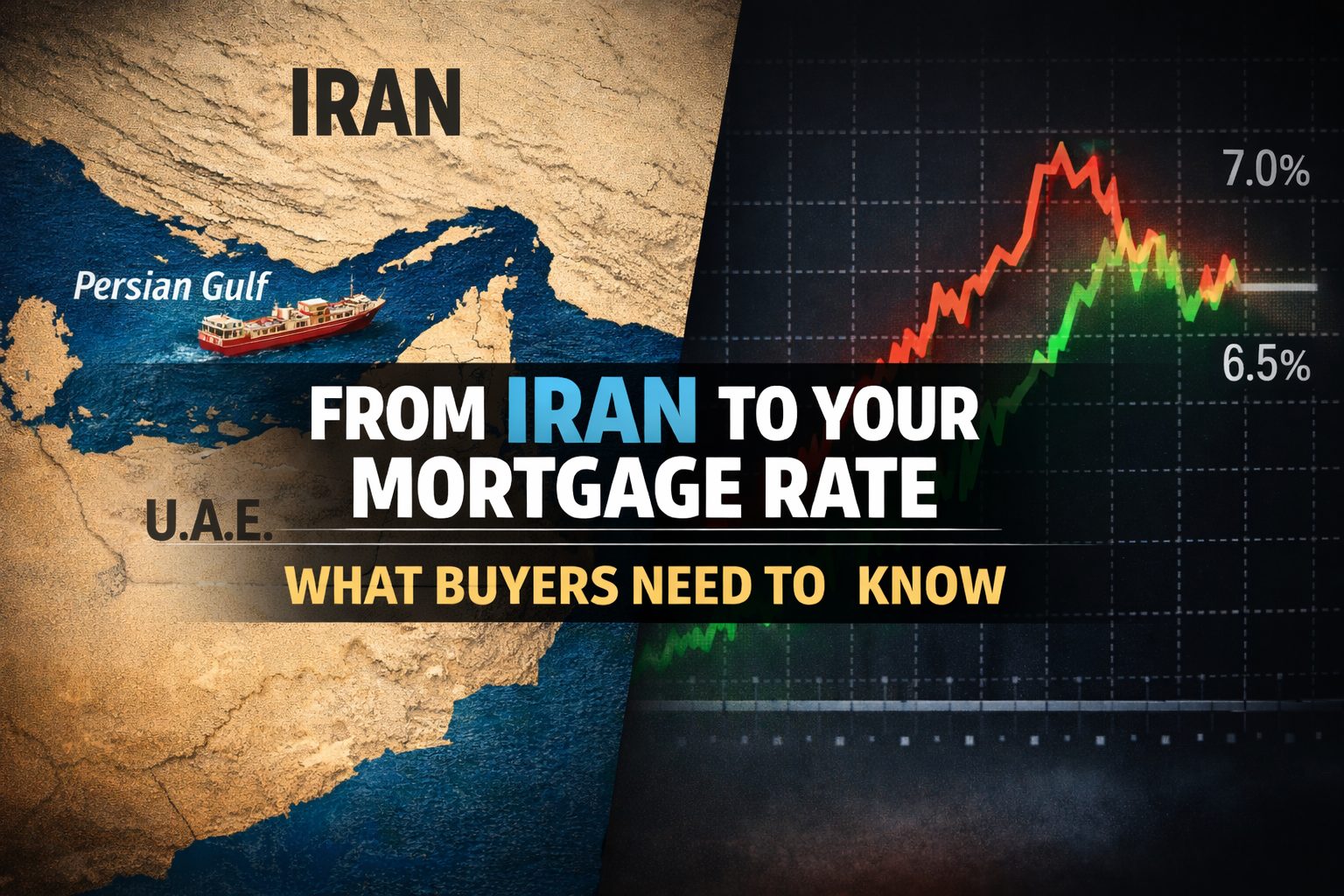
How the Iran Conflict Is Affecting the Orange County Housing Market (Right Now)
At first glance, what’s happening in Iran feels far removed from real estate in Orange County.
However, the reality is different.
Global events like this can move mortgage rates, shift buyer behavior, and change how quickly homes sell — sometimes almost overnight.
And we’re already starting to see it happen.
Why a Conflict Overseas Can Impact Your Mortgage Rate
When tensions rise in the Middle East, one thing the market immediately watches is oil.
More specifically, investors focus on shipping routes like the Strait of Hormuz — one of the most important oil channels in the world. If that supply is threatened, oil prices can spike quickly.
From there, the ripple effect begins.
Higher oil prices can push inflation higher. As a result, bond markets react, Treasury yields move, and mortgage rates tend to follow.
That’s exactly what played out over the past couple of weeks.
Mortgage rates climbed noticeably as tensions escalated, before easing slightly after news of a temporary ceasefire and reduced pressure on oil supply (source: Freddie Mac, Reuters).
What We’ve Seen So Far: Volatility
The biggest theme right now is not direction — it’s volatility.
Rates moved up quickly as uncertainty increased. Then, almost just as fast, they softened when markets saw signs of stabilization.
Freddie Mac reported the average 30-year fixed mortgage rate around the mid-6% range in early April, while Mortgage Bankers Association data showed rates had risen significantly since the conflict began before recently dipping slightly (source: Freddie Mac, MBA via Reuters).
In other words, the housing market isn’t crashing.
But it is reacting.
What This Means for Buyers in Orange County
For buyers, the biggest impact comes down to affordability.
In a market where the median home price is still hovering around $1.2M in Orange County, even small rate changes can make a big difference in monthly payments (source: Redfin).
Because of that, buyers are adjusting their behavior in a few key ways:
- They’re more payment-focused than ever
- They’re taking longer to make decisions
- They’re becoming more selective with condition and price
- And in some cases, they’re pausing altogether
However, this doesn’t mean demand disappears.
Instead, it becomes more intentional.
The homes that feel like a clear value still move. The ones that don’t… sit.
What This Means for Sellers
For sellers, this kind of market shift is where strategy matters most.
When buyers feel uncertainty — whether it’s about rates, inflation, or global events — they don’t stop looking. But they do become more cautious.
That usually leads to:
- Stronger negotiation from buyers
- More attention to property condition
- Less tolerance for overpricing
- Longer days on market for “almost right” homes
So while homes are still selling, the margin for error is smaller.
Pricing correctly and presenting the home well isn’t just important right now — it’s everything.
The Bigger Picture: A More Selective Market
Here’s the real takeaway.
This situation doesn’t automatically create a downturn.
But it does create a more selective market.
And we’re already seeing that dynamic play out across Orange County:
- Well-priced homes are still moving
- Updated, turnkey properties are getting the most attention
- Overpriced or outdated homes are sitting longer than expected
That split market you’ve been hearing about?
This is one of the reasons it exists.
My Take (What I’m Telling Clients Right Now)
If you’re a buyer:
Stay ready. Rates can shift quickly, and opportunities tend to show up when uncertainty is highest.
If you’re a seller:
Don’t price for last month’s market. Price for today’s buyer — the one watching their monthly payment closely.
Because right now, confidence is what sells homes.
Final Thoughts
Most people think real estate is purely local.
And while local factors like inventory and demand matter most, global events can absolutely influence the cost of money and buyer psychology.
That’s what we’re seeing right now.
The Iran situation isn’t directly changing home values overnight.
But it is influencing mortgage rates, and that alone is enough to shift how buyers and sellers behave in today’s market.